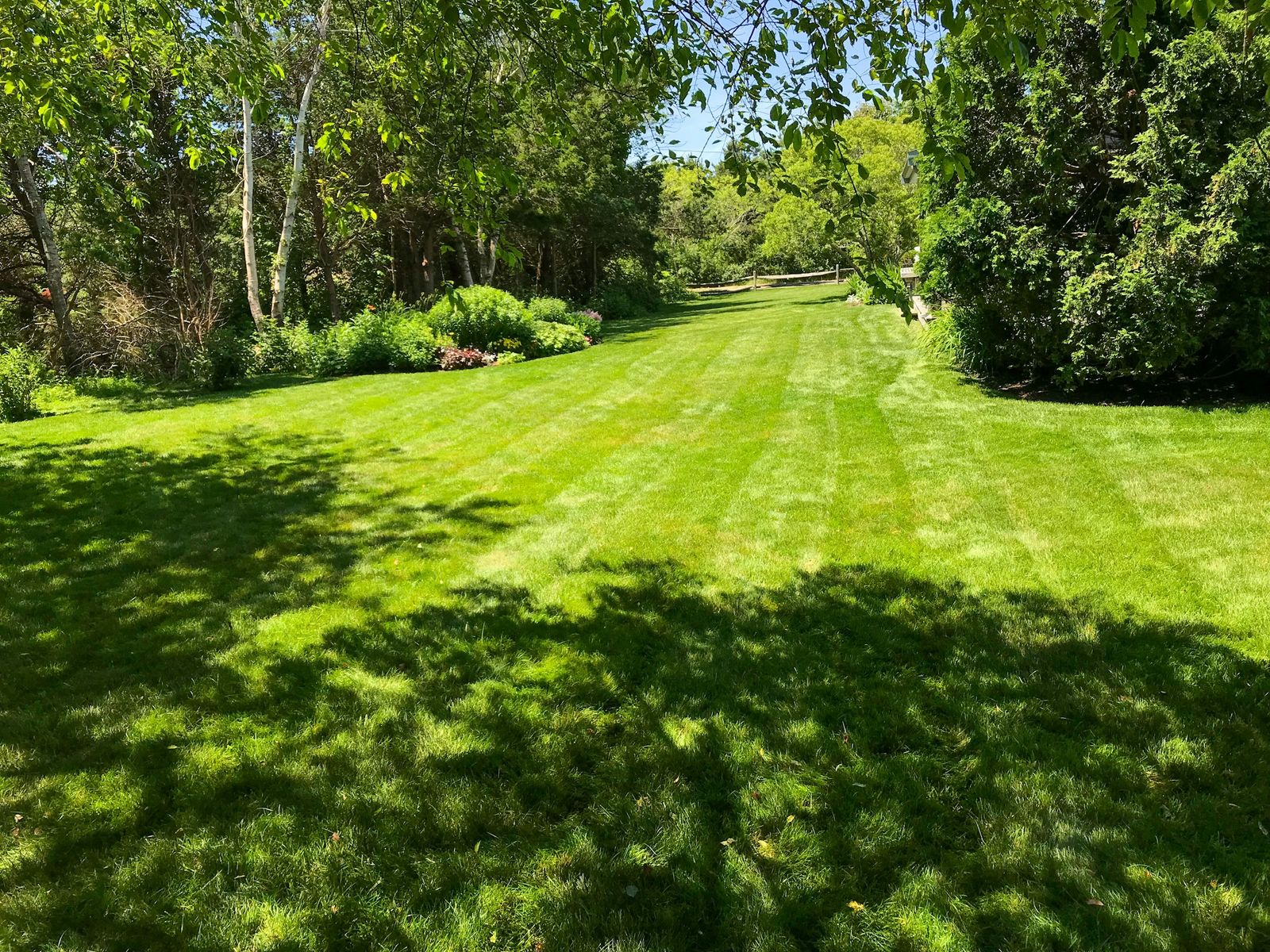
Laying new sod and edging beds a mower can follow
How we lay new sod in East Texas: clear and grade the ground, water it in, then cut clean bed edges a mower can follow and finish the beds with mulch.
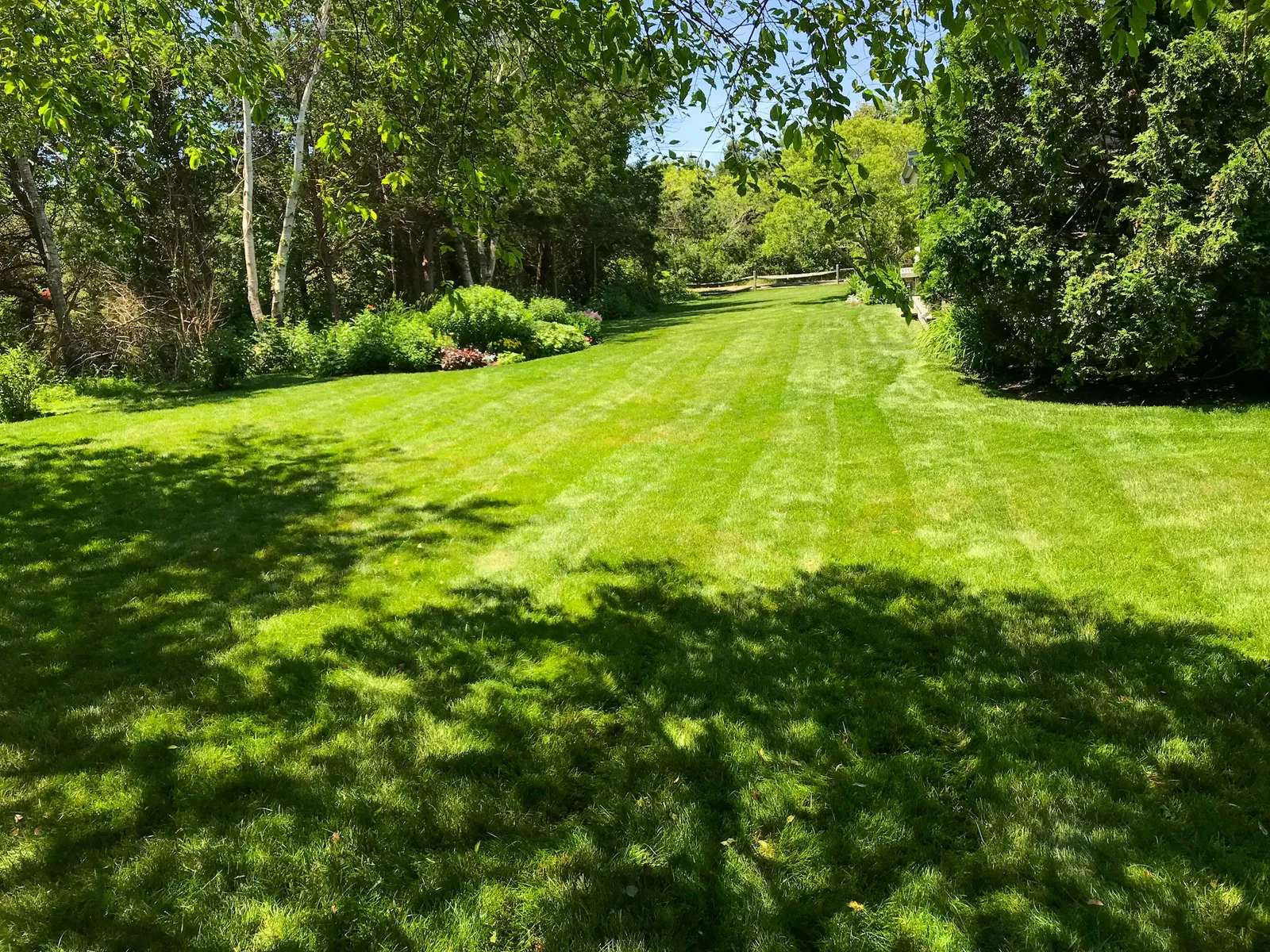
New sod gives you a finished-looking lawn the day it goes down, but it is still a living thing that has to root into the ground under it. When sod fails, it is usually because the ground was not ready or the water stopped too soon. The edges and beds around it matter just as much, because a lawn with ragged edges never looks finished, no matter how green it is.
Ground prep comes first
We start by clearing what is there: dead grass, weeds, rocks, roots and old edging. Then we look at the grade. Low spots hold water and drown roots, and high spots dry out first and get scalped by the mower. We shape the ground so water moves off it and away from the house, and loosen the surface so new roots have somewhere to go.
East Texas soil changes from one yard to the next. Some lots sit on sandy ground that drains fast and dries out quickly. Others sit on red clay that holds water and packs hard. What the soil is doing tells us how much prep it needs and how the new sod will need to be watered.
Laying and watering in
Sod goes down on prepared ground with the seams pushed tight and staggered like brickwork, so there are no gaps for the edges to dry out. It gets pressed down so the roots make contact with the soil, then watered in right away.
The stretch right after it goes down is when sod lives or dies. It needs steady water while it roots, more than an established lawn, and East Texas heat pulls moisture out of it fast. We walk the finished yard with you and tell you how to water it in for the season and the soil you have. Sod laid in the middle of summer needs more water to get through, and if waiting for a milder stretch is smarter, we will tell you.
Edges a mower can follow
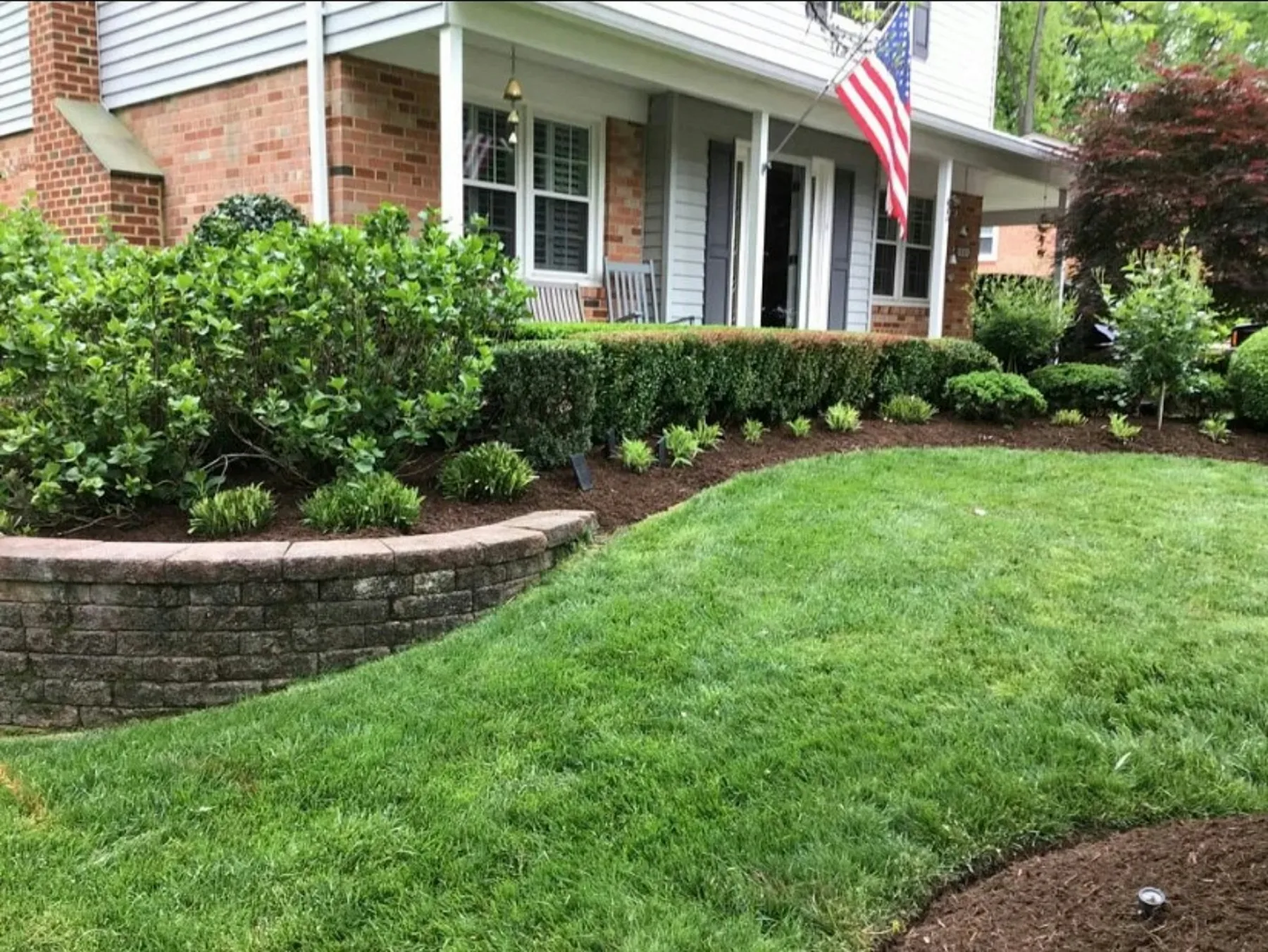
A bed edge is the line between lawn and bed. We cut it in smooth curves or straight runs, deep enough to slow grass from creeping into the mulch, and shaped so a mower can follow it in one pass without leaving a strip to trim by hand. Tight wiggles look good on paper and turn into a chore every time you mow.
Where a bed needs a firmer border, we can set edging. Beds that hold water rot roots, so the bed and the lawn beside it are graded to shed water instead of trapping it.
Mulch finishes the bed
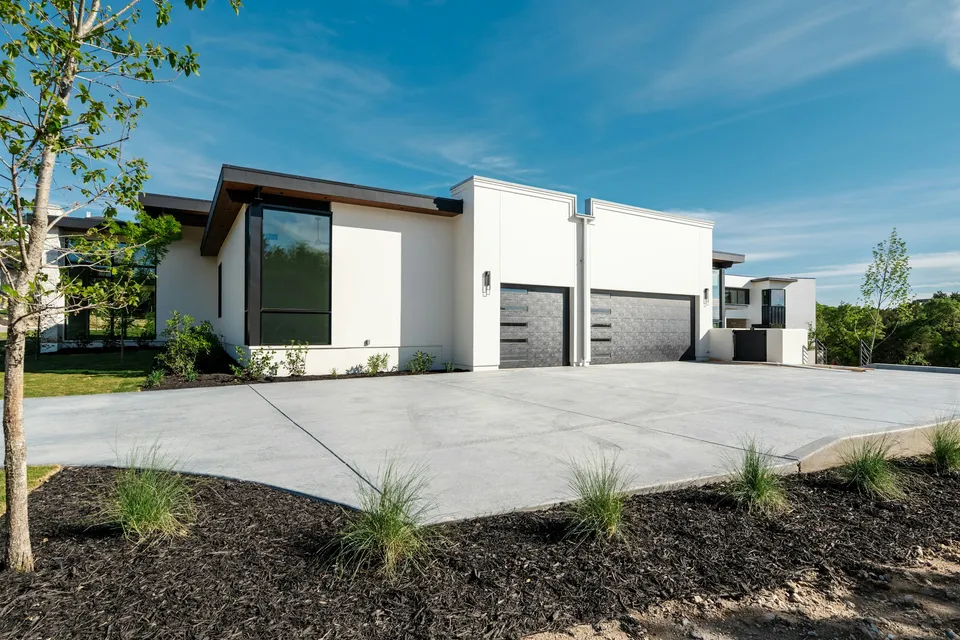
Once the edges are cut, the beds get cleaned out and topped with fresh mulch. Mulch keeps the soil cooler in July, holds moisture and slows down weeds. We keep it pulled back from stems, trunks and siding, and spread it thick enough to do its job without smothering what is planted. Sod, edging and mulch are part of our landscaping work, along with new beds, plantings and cleanups.
For a free estimate on new sod, edging or beds, call 870-292-5801 and we will walk the yard with you.
More photos
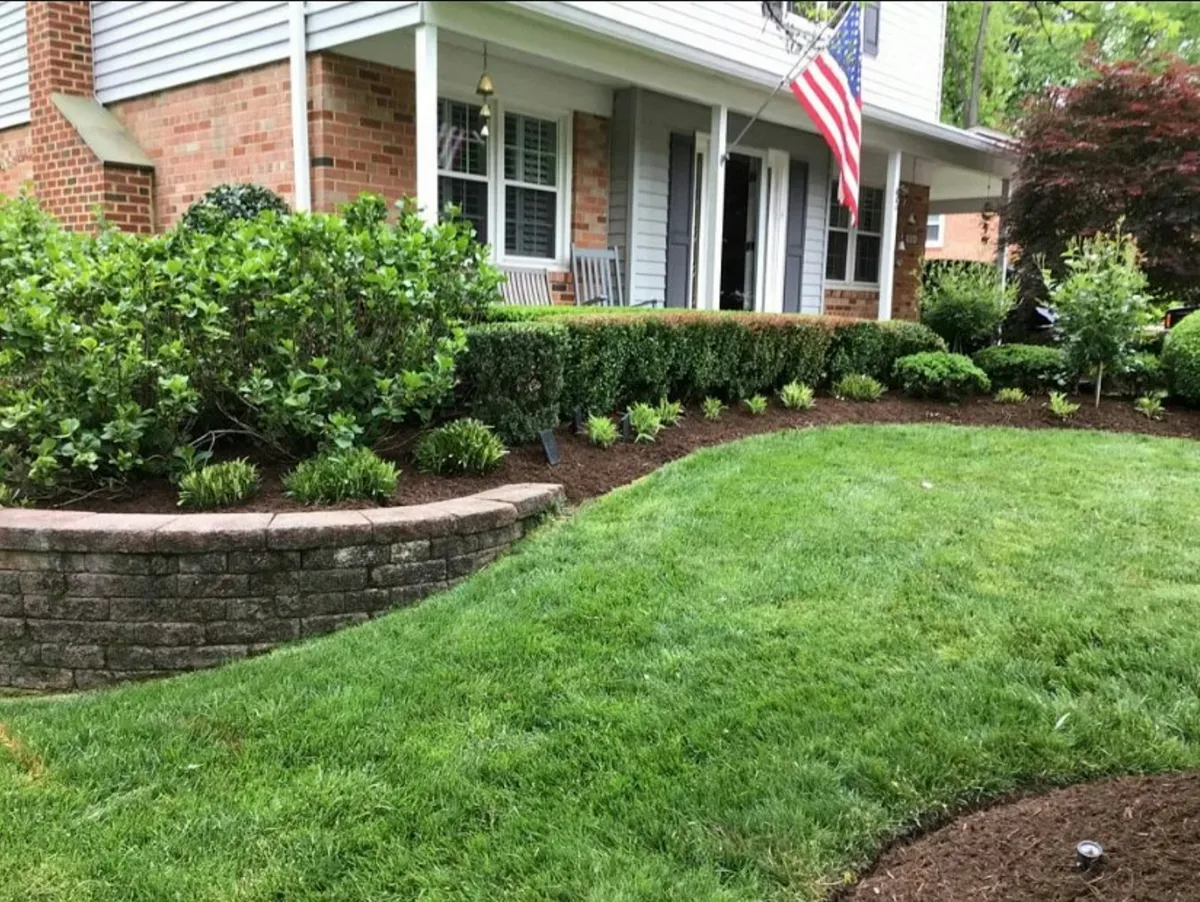
A curved stone bed of shrubs and fresh mulch edged against a green front lawn.