Driveway replacement on East Texas clay
Why driveways crack and heave on East Texas clay, when replacing one section will hold, and what goes into a new driveway from the grade to the cure.
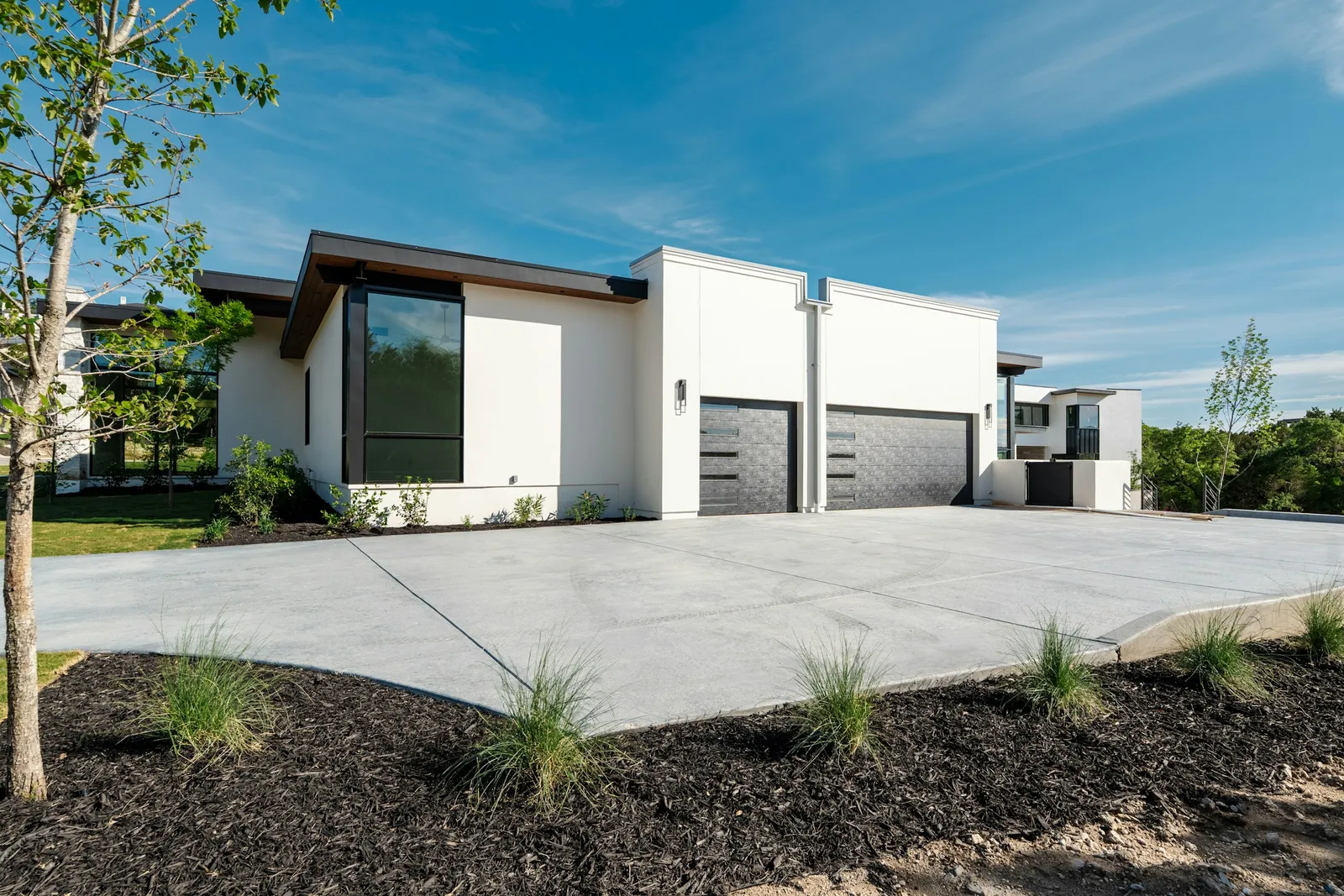
A driveway in East Texas sits on ground that will not hold still. The clay under a lot of yards here swells when it takes on water and shrinks when it dries out, and it does that every year. Concrete is strong, but it does not bend, so when the ground under it moves, it cracks.
Why driveways crack and heave
Most driveway damage around here comes from a few causes. Water gets under the slab along an edge or through an open crack and softens or washes out the base. Clay under one part of the driveway stays wetter than the rest and lifts that part, or a tree root pushes up a corner. Or the slab was poured without enough joints, so it cracked wherever the ground decided.
A single hairline crack is usually not a problem. What deserves a look is a crack that keeps opening, a section that has dropped or lifted so one edge sits higher than the next, or a low spot where water pools and stays.
Section repair or full replacement
Not every cracked driveway needs to come out. If the damage is limited to one or two sections and the rest of the slab is sound and level, we can often cut out the broken part at a joint, fix what is under it, and pour a new section to the height of the concrete around it.
When most of the slab has settled, heaved or broken into pieces, patching one section just moves the problem next door. In that case we will tell you so, and the estimate will show a full tear-out and haul-off with a new pour. Either way we explain what we saw, so you can judge it for yourself.
What goes into a new driveway
The work you do not see is the work that matters. This is the order we build in:
- Grade. We look at where water runs and shape the ground so it drains off the driveway and away from the house.
- Base. The subgrade is prepped and a base is compacted so the slab sits on something firm and even.
- Forms and steel. Forms are set to the finished height you asked for, and reinforcement is placed before a truck is ordered.
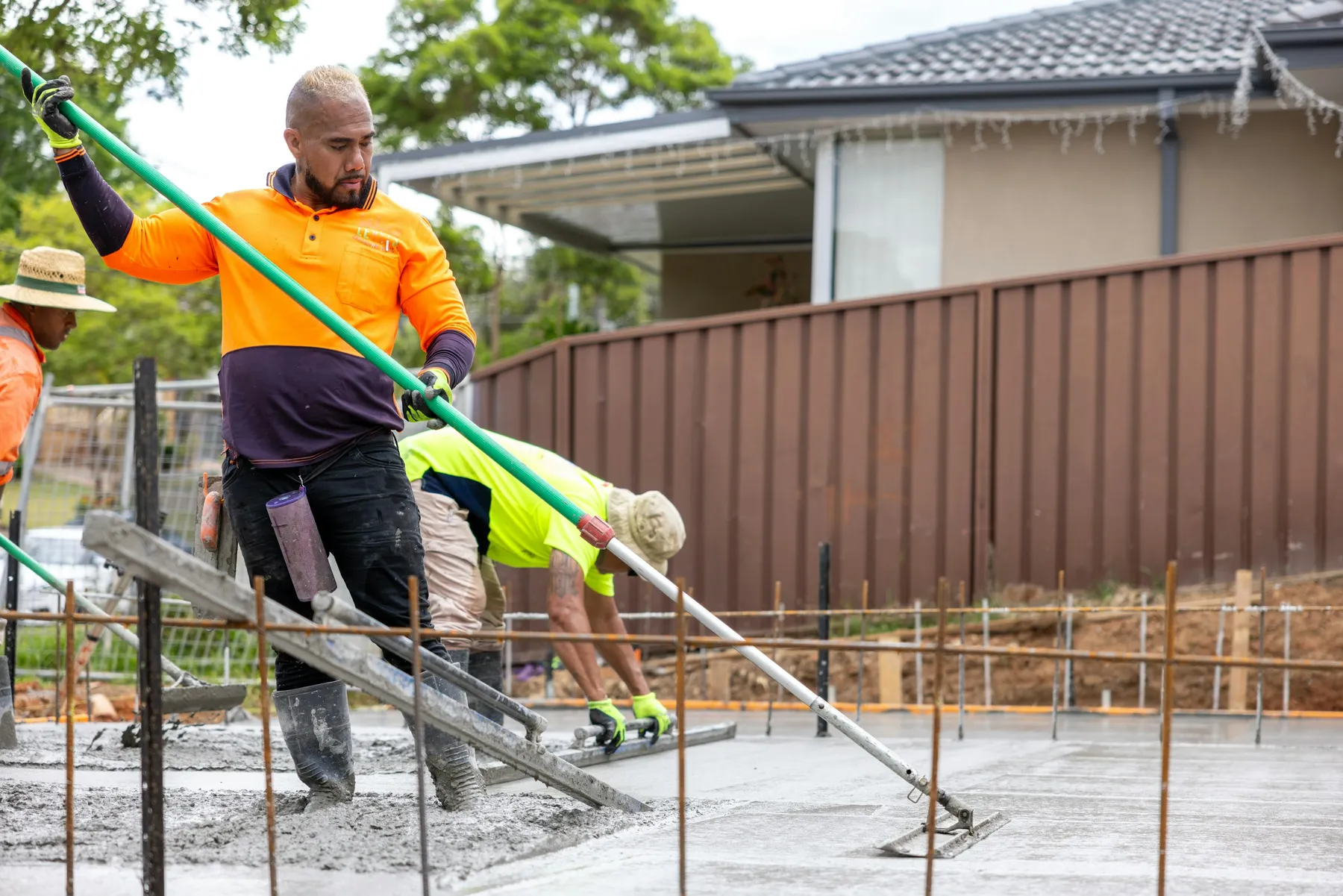
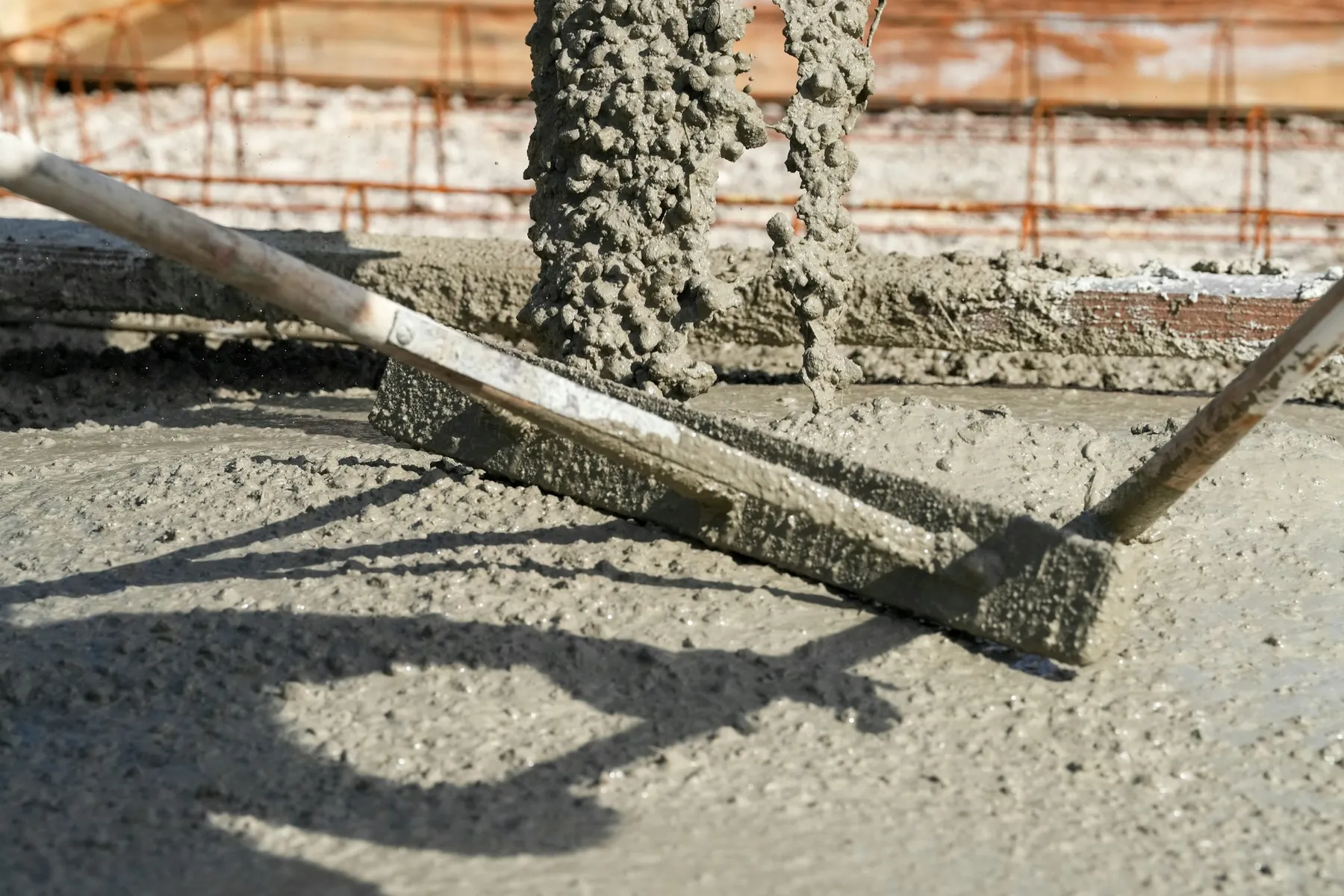
- Pour and finish. The concrete is placed, screeded, floated and given a broom finish for traction in the rain, with the edges tooled.
- Control joints. Joints are cut where the slab wants to crack, so when it cracks, it cracks there in a straight line.
- Cure and cleanup. The slab cures, the forms come off, and the site is left clean.
How soon you can drive on it depends on the mix and the weather, and we give you a timeline at the pour. Foot traffic comes first. Vehicles wait until the slab has cured enough to carry them.
Before the estimate
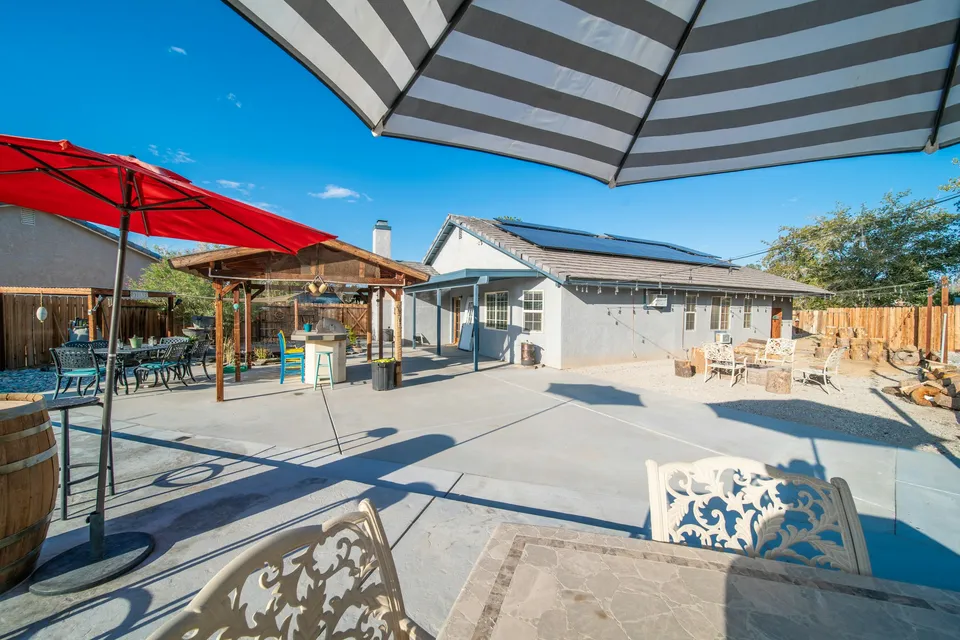
It helps to know how you use the driveway: what parks on it, whether a trailer or work truck comes and goes, and whether you want it wider or longer than it is now. Driveways are one part of our concrete work, along with patios, walkways, approaches and parking pads, so if the sidewalk or the front steps need attention too, we can look at all of it on the same visit.
Call 870-292-5801 and we will come look at the slab and the ground under it, then give you a free estimate.
More photos
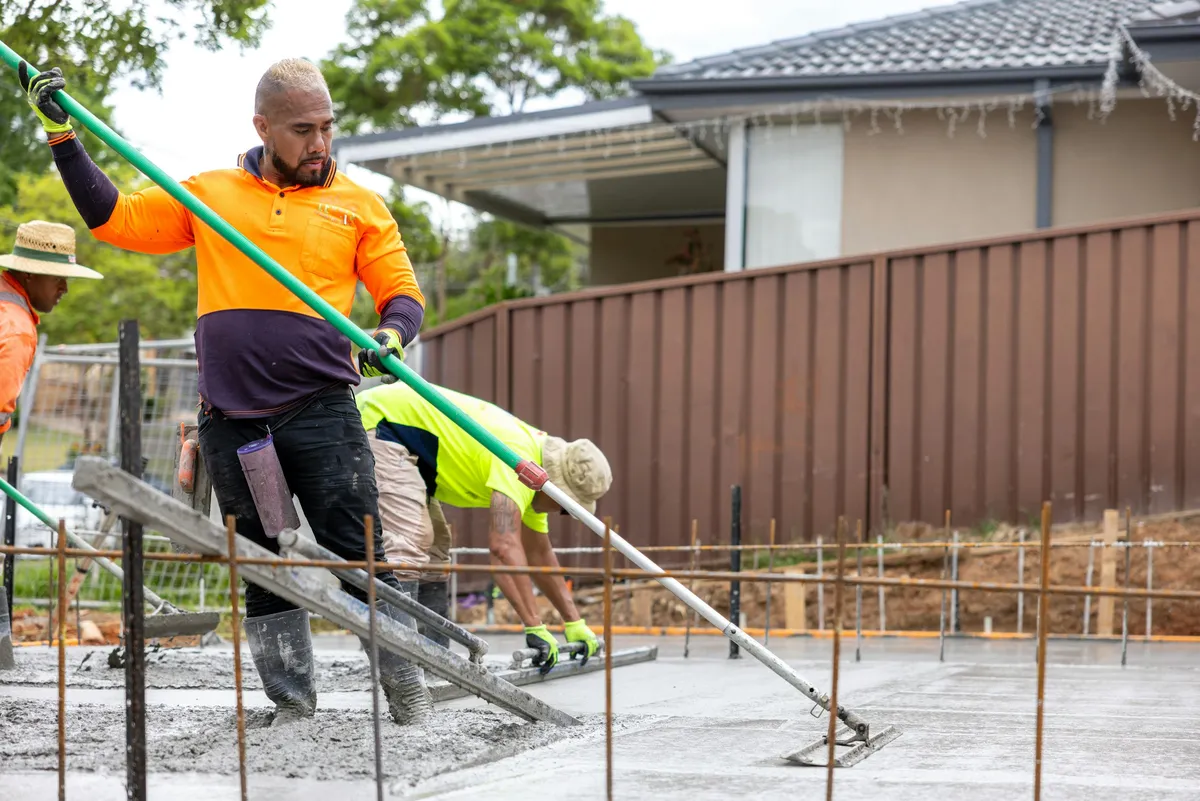
Two workers screeding a fresh slab poured over rebar. 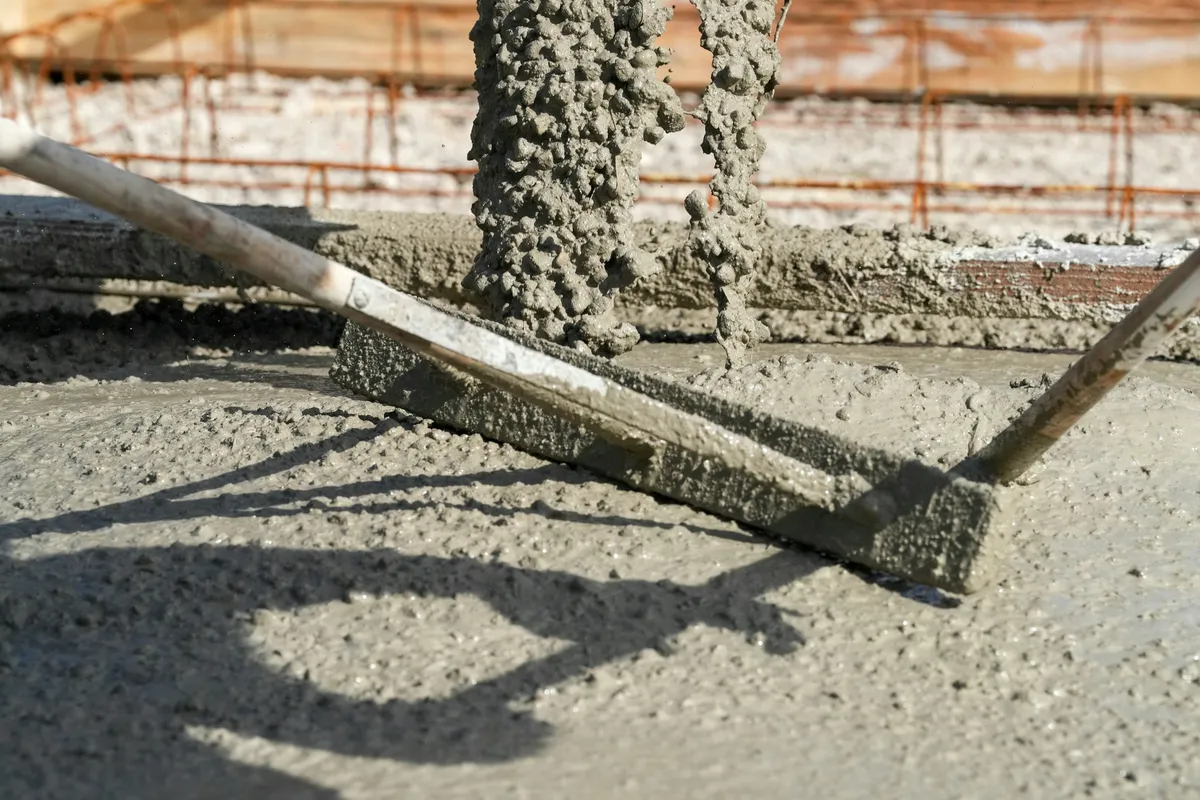
Concrete coming off the chute, with a screed board ready to strike it level.