Fixing a gate that drags or will not latch
Why wood gates sag, drag and stop latching, and how we fix them around Tyler: reset the hinge post, square the frame, and hang hardware that holds.
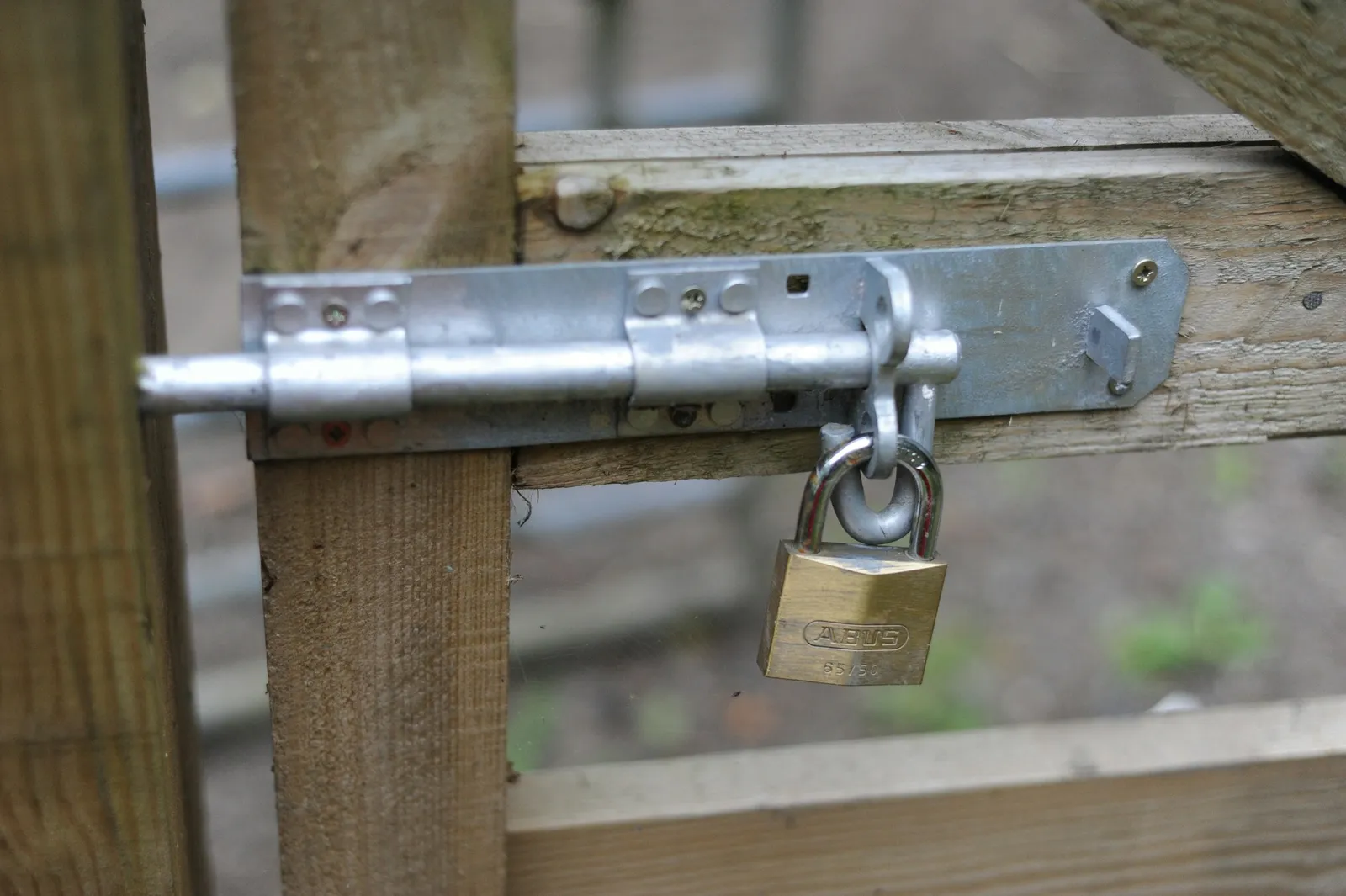
A gate takes more abuse than any other part of a fence. It swings every day, the wind pushes on it, kids hang on it, and it carries all of its weight on one post and a couple of hinges. So when a fence starts to show its age, the gate usually shows it first. It drags on the ground, you have to lift it to latch it, or it will not close at all.
Why gates sag and drag
Gates sag for three usual reasons. Often more than one is at work on the same gate.
The hinge post is leaning. That post carries the whole gate. If it has rotted at the ground line, or the ground around it has gone soft after a wet spring, the top tips toward the opening and the latch side of the gate drops.
The hinges are loose or worn. Screws back out of old wood, hinge pins wear, and light hinges bend under a heavy gate. Each small bit of play lets the gate hang a little lower.
The frame has racked. A wooden gate is a rectangle that wants to become a parallelogram. Without a brace running the right way, the latch corner slowly drops and the gate goes out of square.
How we fix it
We start by finding out which of those it is, because the fix follows the cause. New hinges on a gate hung from a rotten post just put off the next call.
If the post has failed, we pull it and set a new one in concrete, plumb, so the gate has something solid to hang from. If the frame has racked, we square it back up and set the brace so it runs from the bottom of the hinge side to the top of the latch side, where it holds the latch corner up. Worn or undersized hinges and bent latches get replaced with hardware sized for the gate.
Most dragging gates can be fixed without replacing the gate itself. When the wood is too far gone to hold a screw, we can build a new gate to match the fence around it. If the posts on either side of the gate are also soft, the estimate says so, so you know what you are looking at before any work starts.
The swing test
A gate is not done until it works. Before we leave, every gate we touched gets opened, closed and latched, more than once and from both sides. It should swing through its full arc without scraping, close without a shove, and latch the first time.
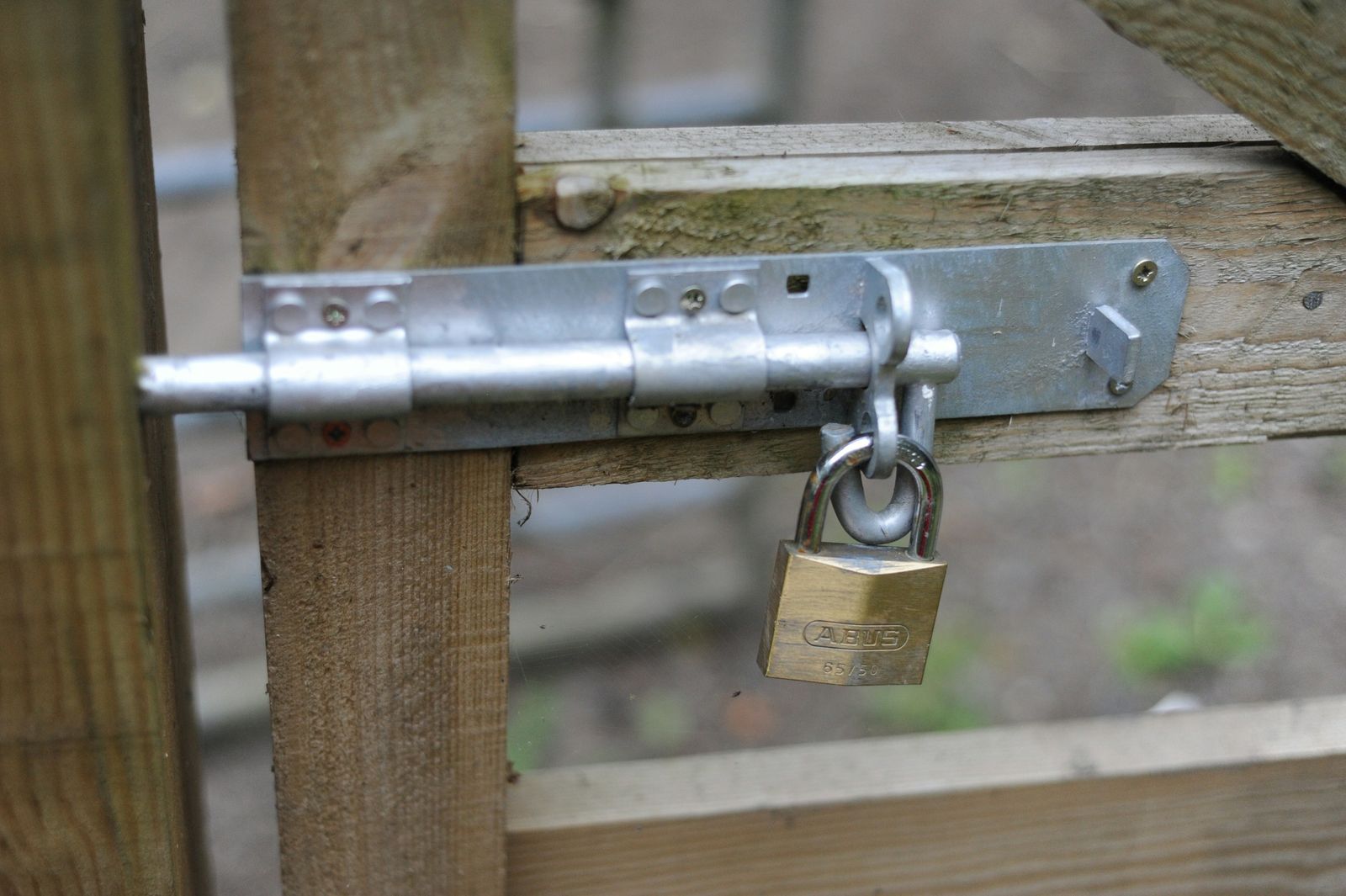
If a gate does not pass, we adjust it until it does. If you keep a padlock on the gate, have the key handy so we can check that the hasp and bolt still line up after the gate is rehung.
Gates are one part of our fence and gate repair work, along with leaning runs, rotted posts and broken pickets. If the fence beside the gate needs attention too, we can look at the whole line on the same visit.
Call 870-292-5801 and tell us what your gate is doing. We will come look at it and give you a free estimate.
More photos
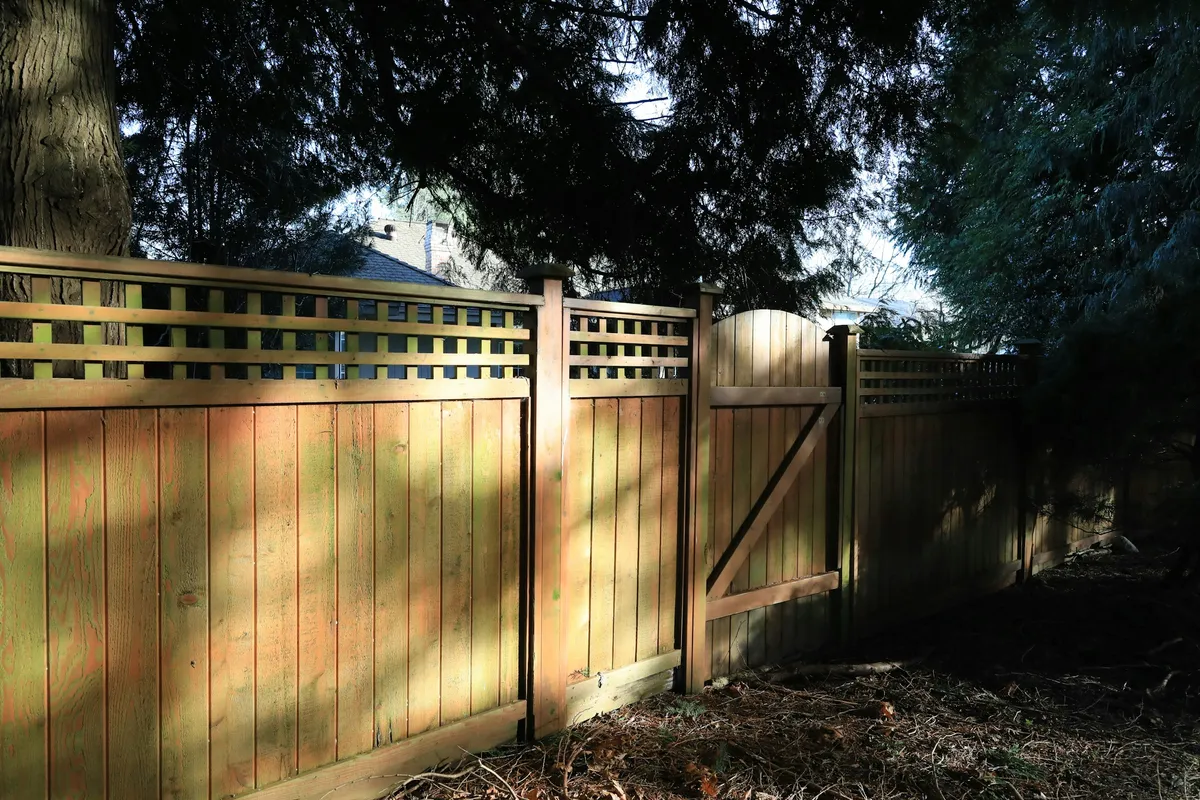
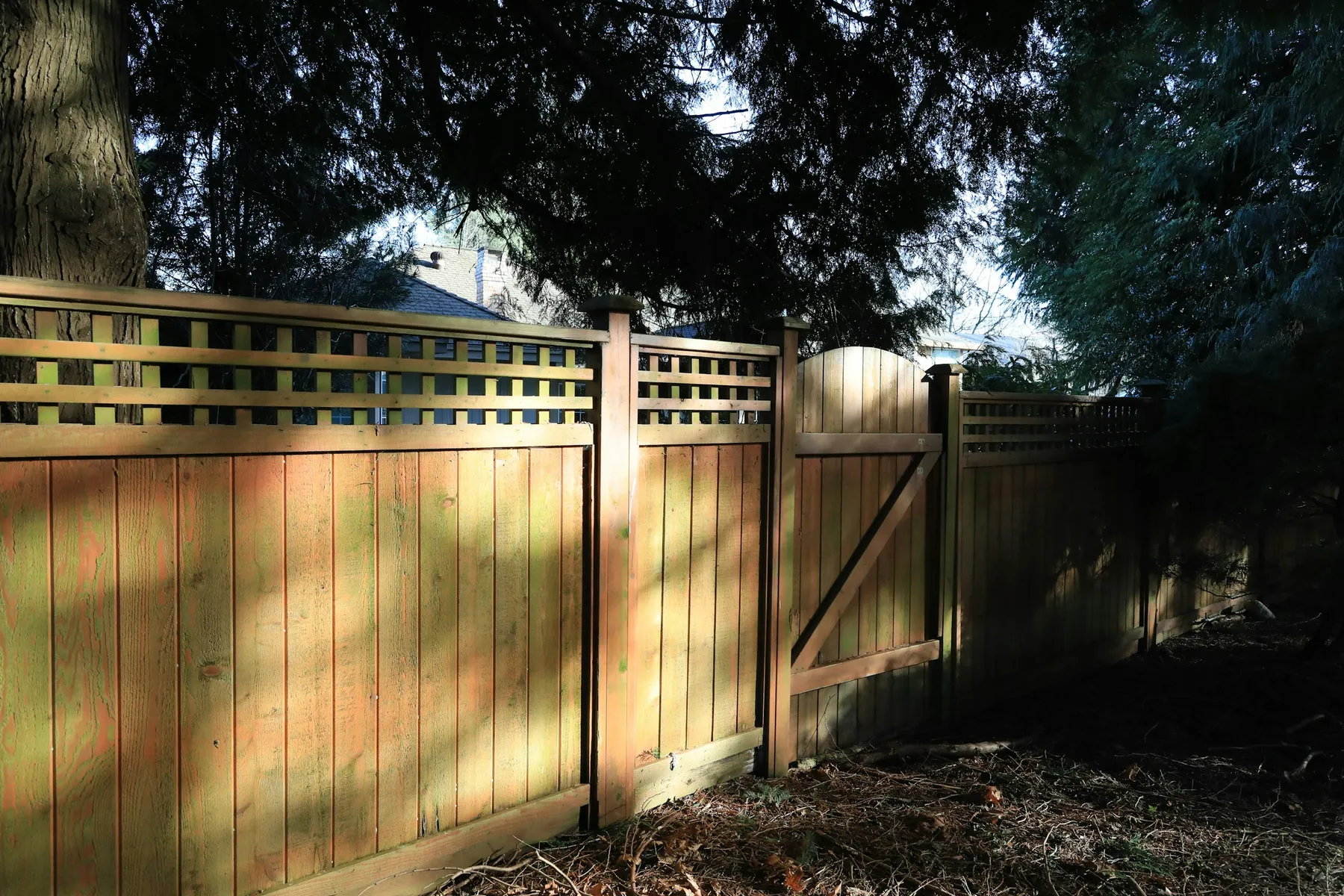
A lattice-topped privacy fence with a gate hung into the run.